 +1 (774)478-6704
 Order@premiumonebackdrops.com


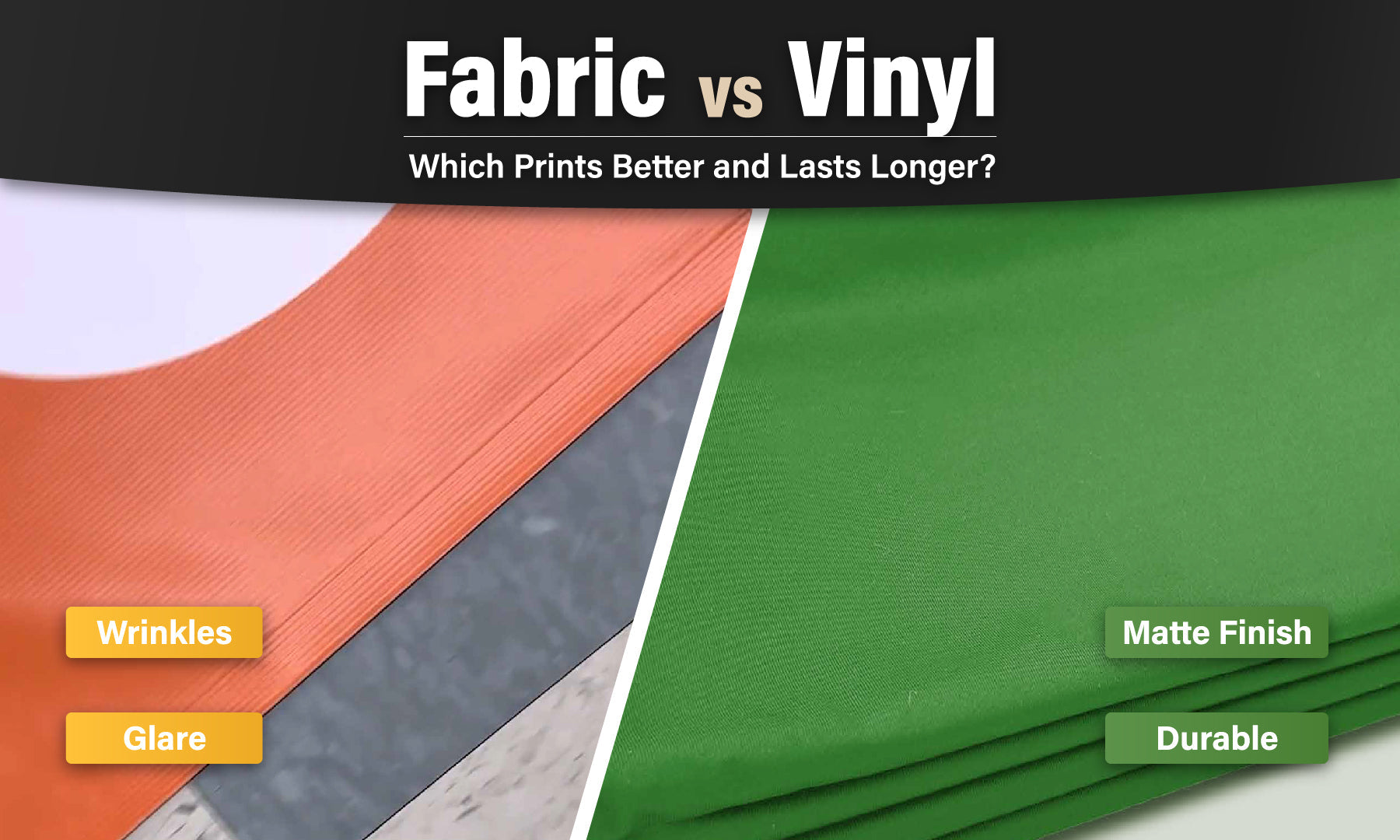
When it comes to choosing a backdrop material for photography, events, or professional branding, the decision between fabric and vinyl backdrops is more than just price and appearance — it’s about performance under real-world shooting conditions, durability over time, and final visual quality. At pob backdrops, we regularly advise photographers and studios on this exact question — and the answer increasingly favors fabric for studio and professional use.
Here’s a detailed, side‑by‑side comparison that reflects what many industry professionals have discovered.
🎨 1. Print Quality: Fabric Wins for True Color & Matte Finish
One of the most important characteristics of a backdrop is how it interacts with light and how colors reproduce on camera.
Fabric backdrops — especially polyester or dye‑sublimated tension fabric — bond ink into the fibers, creating rich, vibrant colors without surface reflections. Light is absorbed rather than bounced, producing authentic tones and less glare under strobes and continuous LED lights.
Vinyl backdrops, made from PVC, print on a hard surface. While vinyl can deliver high resolution and bold graphics, its slow-to-none light absorption results in specular highlights and hotspots when lit directly — forcing photographers to adjust or diffuse lights continually.
👉 Fabric = more natural colors + non-reflective
👉 Vinyl = sometimes glossy + reflective under studio lights
🔁 2. Wrinkles, Folding & Transport: Fabric Is More Flexible
- Fabric backdrops fold easily and can be packed compactly. Small wrinkles naturally relax or can be steamed out quickly, especially with wrinkle-resistant fabric options.
- Vinyl backdrops must be rolled to avoid permanent creases — and once vinyl has deep folds, they often don’t flatten out fully, impacting visual quality on camera.
💡 3. Light & Reflection: Fabric’s Non-Reflective Advantage
Professional photographers universally prefer matte backdrops because they don’t interfere with lighting setups.
Fabric — particularly matte polyester — absorbs and diffuses light, reducing the risk of glare, hot spots, and uneven lighting across the frame. This makes it ideal for controlled studio environments and product shoots where color and shadow must be predictable.
Vinyl, even in matte finishes, still reflects more light than fabric due to its plastic base. Under strong key lights or ring lights, vinyl can produce glare that shows in final images, requiring extra diffusion or camera filters to correct.
👉 Fabric backdrops avoid distracting reflections and deliver smoother light behavior.
🧵 4. Durability: Which Lasts Longer?
- Fabric backdrops are generally durable when handled properly. High-quality polyester can last for years, and minor wear rarely affects print integrity or light response.
- Vinyl backdrops can resist moisture and heavy handling, but they are more likely to develop micro-cracks or surface wear over time — especially when transported or rolled repeatedly.
🧠 5. Practical Use Cases: Where Fabric Outshines Vinyl
| Scenario | Best Material | Why |
|---|---|---|
| Studio portraits | Fabric | Matte finish, non-reflective |
| Product & e-commerce | Fabric | Smooth background, fewer post edits |
| Influencer & social content | Fabric | Natural color reproduction |
| Outdoor events | Vinyl (occasionally) | Weather-resistant |
| Travel & location | Fabric | Easier to fold/transport |
🏆 Final Verdict: Fabric Backdrops Lead the Pack
Vinyl has its place — especially in outdoor or high-wear conditions where wipeability and water resistance help. But for photographers and creators who care about print fidelity, lighting behavior, transportability, and long-term appearance, fabric backdrops are the superior choice.
At pob backdrops, we specialize in premium fabric backdrops that elevate studio quality and visual consistency. Whether you’re shooting portraits, products, videos, or events, fabric delivers the professional results photographers trust — every time.
💡 Summary
- 🌟 Better print quality — fabric absorbs ink, offering deeper colors.
- 📸 Non-reflective finish — great for lighting control.
- 🎒 Easier transport & storage — folds and relaxes naturally.
- 🪶 Durable long-term with proper care.
For photographers and studios seeking the edge in image quality and durability — fabric backdrops are the smart choice.