 +1 (774)478-6704
 Order@premiumonebackdrops.com


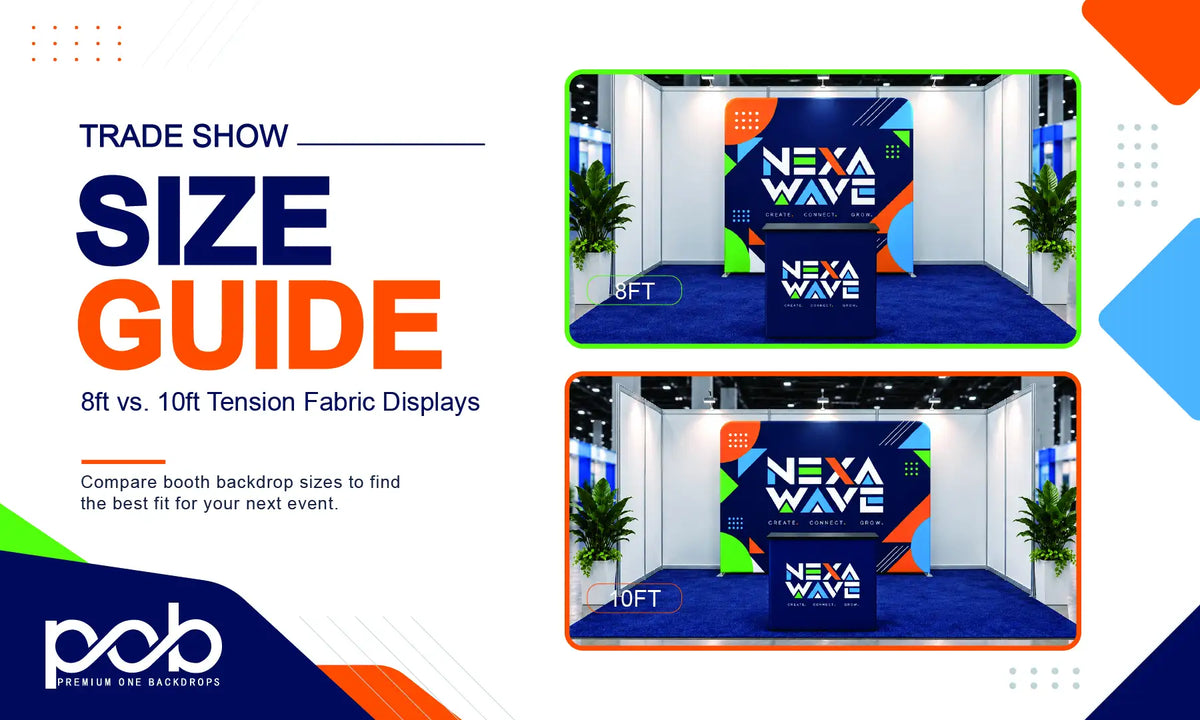
No, your tension fabric display does not always need to be the same width as your booth.
A 10ft booth does not automatically require a 10ft display wall, and a 20ft booth does not need one continuous 20ft backdrop. The best width depends on how much branded coverage you want and how much room must remain for counters, tables, televisions, products, staff, and visitors.
A wall that is too large can make the booth feel crowded. A wall that is too small can make the branding look disconnected. The goal is to create a strong background while keeping the booth practical and easy to use.
This tension fabric display size guide explains how to choose a suitable width for small event spaces, 10x10 booths, 10x20 booths, and larger exhibition layouts.
Measure the Booth Before Choosing a Display
Start with the complete booth layout, not the product size. The backdrop may be the largest visual element, but it is only one part of the space.
List everything that must fit inside the booth:
- A reception counter or podium
- A 6ft table
- A television or monitor
- A product demonstration area
- Samples, equipment, or shelving
- Staff working inside the booth
- Room for visitors to stop and talk
- A clear entrance and exit
Also confirm the exact booth width and depth, the number of open sides, neighboring booth boundaries, electrical access, and any venue rules for display height or visibility.
Do not measure only the printed fabric. Check the full width and depth of the assembled frame, including its bases or feet. A display described as approximately 10ft wide may fit very closely inside a 10ft booth and leave little room for setup or venue restrictions.
You can review the available formats in the Tension Fabric Display collection, but the final choice should be based on your actual floor plan rather than the product image alone.
Choosing a Display for a Small Event Space
Hotel conferences, recruiting events, local business shows, and smaller corporate events may provide less room than a standard trade show booth.
In these spaces, a 5ft, 6ft, or 8ft wall may create enough branded coverage without taking over the room. A compact backdrop can leave more space for a registration table, product samples, or staff standing beside the display.
The wall should still show the company name, one clear message, and a strong visual. Avoid filling a small display with too much text.
For compact spaces, a Straight Tension Fabric Backdrop Display is often a practical choice because it creates a clean front-facing background without using extra floor depth.
8ft vs. 10ft Displays for a 10x10 Booth
A 10x10 booth is one of the most common trade show spaces, but the backdrop does not need to fill the complete 10ft rear boundary.
Both 8ft and 10ft tension fabric walls can work. The better choice depends on what else must fit inside the booth.

Choose an 8ft Display When You Need More Flexibility
An 8ft wall may leave about 2ft of width inside a nominal 10ft booth before accounting for the exact frame dimensions, bases, and venue boundaries.
That extra room can be useful for:
- A narrow banner stand
- A small product pedestal
- Access to cables or electrical services
- A staff entry point beside the wall
- A table positioned slightly off-center
An 8ft wall can still create a strong brand presence when it is centered and designed with one visible logo, one short headline, and one main image.
It is often the better option when the booth must support several activities instead of acting only as a photo or branding background.
Choose a 10ft Display When You Want Wider Coverage
A 10ft backdrop creates one wide, continuous graphic area across most of the rear booth boundary. It works well when the main goal is a large brand statement behind a compact counter or open conversation area.
Do not choose a 10ft wall only because the booth is called 10x10. Check the exact outer frame width, base placement, booth boundaries, and venue rules first.
A full-width wall may also leave less room for side products. When you plan to add a banner stand, product tower, or separate television beside the backdrop, an 8ft wall may create a cleaner layout.
An 8ft wall can look just as intentional as a 10ft wall when the furniture and artwork are aligned properly.
For complete booth examples, review the 10x10 Trade Show Booth options to see how backwalls, counters, tables, and other elements can share the same footprint.
Consider the Furniture in Front
A 6ft table can visually dominate a narrow backdrop when both are centered. An 8ft wall usually leaves visible graphic space on each side of the table.
A compact counter takes up less width and can work with either an 8ft or 10ft wall. Position the counter away from the main logo or product image so the most important artwork remains visible.
Prepare Artwork for the Exact Size
Do not simply stretch artwork made for an 8ft wall across a 10ft template. A wider backdrop may need different image placement, spacing, and headline proportions.
Plan the design around the furniture and people that will stand in front of it. Keep the logo, headline, and key message above the areas most likely to be covered.
Display Widths for 10x20 and Larger Booths
A 10x20 booth provides more options, but the complete 20ft width does not need to be covered by one wall.
One 8ft or 10ft backdrop can serve as the main brand wall while the remaining space supports a television, product demonstration, consultation point, or second display.
This layout can be more useful than one continuous graphic wall because it divides the booth into clear activity areas.
Another option is to use two coordinated fabric walls. One can introduce the company, while the second supports a product, service, or campaign message.
Review the 20ft Trade Show Booth layouts to see how multiple displays, counters, televisions, and open areas can work together.
In larger booths that are open to several aisles, multiple smaller walls may work better than one oversized backdrop. They can help define reception, product, media, and meeting areas while keeping the booth visible and accessible.
Straight vs. Curved Displays: Check the Full Footprint
Straight and curved tension fabric displays can both create professional backgrounds, but they use floor space differently.
A straight display follows a direct line across the back of the booth. Its position is easier to plan, and it usually keeps more floor depth available in front.
A Curved Tension Fabric Backdrop Display projects farther into the booth at the center or sides, depending on the structure. The curve can add depth and create a softer visual shape, but it may also reduce the open area in front.
Compare the full width and depth after setup, not only the listed width. Make sure there is still enough room for the counter, table, television, products, staff, and visitor conversations.

Three Practical Booth Layouts
Layout 1: 8ft Backwall with a 6ft Table
This layout works for exhibitors that need space for samples, literature, equipment, or product demonstrations. Keep the logo and headline above table height, and leave at least one side open for entry.
Layout 2: 10ft Backwall with a Compact Counter
This setup gives the booth broad rear-wall coverage with a simple welcome point. Position the counter away from the main artwork and keep the center of the booth open for conversations.
Layout 3: Backwall with a TV and Product Area
In a wider booth, use the backdrop as the main brand area and place the television or products in a separate zone. Leave enough distance between the areas so people watching the screen do not block the product display.
Common Size-Selection Mistakes
Choosing the Largest Wall Without Planning the Booth
A larger wall does not automatically create a better display. It may leave too little room for visitors, staff, furniture, or products.
Ignoring the Bases
Display bases can extend toward the front or sides. Include them in the floor plan instead of measuring only the fabric width.
Forgetting What Will Stand in Front of the Wall
Tables, counters, televisions, products, and people can cover important artwork. Choose the wall size and prepare the design with these items already included in the plan.
Assuming Every 10x10 Booth Is the Same
Venue rules, neighboring booth layouts, divider systems, and service access can vary. Confirm the real booth details before ordering.
Frequently Asked Questions
Does a 10x10 booth require a 10ft backdrop?
No. An 8ft backdrop may provide enough branded coverage while leaving more room for another display, product area, or access point. Choose the size from the complete layout, not the booth width alone.
Is an 8ft backdrop too small for a trade show booth?
No. An 8ft display can look strong and professional in a 10x10 booth when it is positioned correctly and uses clear artwork.
Can I place a 6ft table in front of an 8ft backdrop?
Yes. Keep the main logo and headline above table height, and make sure the table does not block the entrance or leave too little room for staff.
Should I choose a straight or curved display for a small booth?
A straight wall usually keeps more floor depth open. A curved wall adds visual depth but may extend farther into the booth. Compare the exact assembled dimensions before deciding.
Can I use one 10ft wall in a 10x20 booth?
Yes. A 10ft wall can create the main branding area while the remaining space is used for a television, product demonstration, consultation area, or second display.
What information should I send when requesting a size recommendation?
Send the booth width and depth, number of open sides, venue restrictions, preferred wall position, and the dimensions of any counter, table, television, or product display.
Choose the Width That Supports the Whole Booth
The best tension fabric display is not always the one that fills the complete booth width. It is the one that provides enough branded coverage while leaving room for the people, products, furniture, and activities inside the booth.
Measure the full space, compare the exact assembled dimensions, and plan where every booth element will go before ordering.
Need help choosing between an 8ft, 10ft, straight, or curved display? Contact the POB team with your booth dimensions, event layout, planned booth elements, and required date for a more suitable recommendation.