 +1 (774)478-6704
 Order@premiumonebackdrops.com


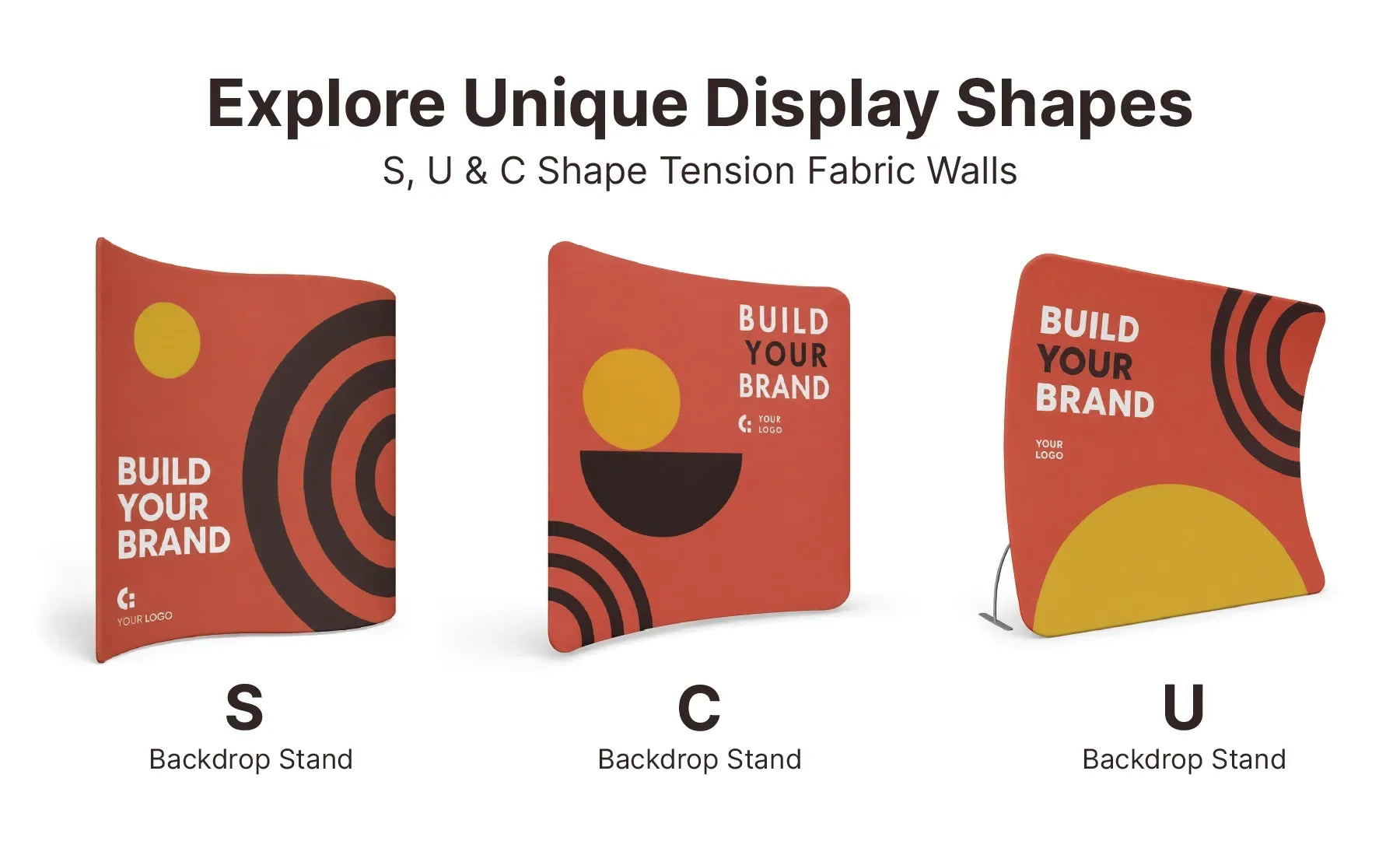
A straight backdrop creates a clean branded surface, but some events need more than a conventional flat wall. When a booth must guide visitors, define a presentation area, or remain visible from several directions, the shape of the display becomes part of the booth plan.
S-, U-, and C-shaped tension fabric walls add movement and depth without requiring a complex custom-built structure. Depending on the layout, they can divide a booth, surround a demonstration, frame a photo area, or create a focal point that looks different from a standard backwall.
The right shape should not be selected only because it looks unusual. Booth dimensions, aisle direction, visitor movement, graphic placement, viewing angles, and the activity planned inside the space all affect the final result.
This guide explains how S, U, and C shape tension fabric displays work, where each style is most useful, and how to plan the artwork and booth layout around the structure.
Why Display Shape Matters
Most exhibitors begin with the graphic: the logo, colors, headline, product images, and call to action. These elements are important, but visitors also notice the physical outline of the display and how it changes the space around them.
A shaped tension fabric wall can influence:
- Where visitors look first
- Which direction they approach from
- Whether the booth feels open or more defined
- How different booth activities are separated
- How much of the graphic is visible from nearby aisles
- Whether the display creates one focal point or several
This is why the shape should be considered early in the booth-planning process. Curved structures can create softer, more welcoming lines than rectangular walls, but they also use floor space differently.
Before choosing a shape, confirm the total floor space required, nearby aisle positions, and the room needed for staff, visitors, products, and any separately selected booth items.
For additional industry guidance on planning visitor movement and keeping one clear message at the center of an exhibit, read EXHIBITOR Magazine’s Top Seven Design Tenets From the Museum World.
S Shape Tension Fabric Wall: Movement and Multiple Viewpoints
An S-shaped tension fabric wall uses two opposing curves to create a flowing profile. Instead of showing one flat surface, the wall changes direction across its width.
As visitors walk past the booth, different parts of the graphic become visible. This makes the display useful when the booth can be approached from more than one direction or when one open space needs to be divided into two connected areas.
Where an S Shape Works Best
- Two service categories presented within one booth
- A reception area separated from a demonstration space
- A photo wall with several viewing angles
- A booth open to more than one aisle
- A visual divider between two related activities
When double-sided graphics are selected, one side can feature a product message while the other supports the company story. Confirm the selected printing configuration before preparing artwork for both sides.
Graphic and Layout Tips
Do not treat an S Shape Tension Fabric Backdrop Display like one flat rectangular canvas. Keep the main logo and most important headline away from the strongest bend, and place essential information where it faces the primary aisle.
Large color areas, gradients, patterns, and lifestyle images usually follow the curves more naturally than small text. Leave enough open space around the wall so visitors can understand the complete S-shaped outline.

U Shape Tension Fabric Display: Create a Focused Branded Zone
A U-shaped tension fabric display curves around three sides of a central area while leaving one side open. It creates a visually defined, semi-enclosed zone without forming a completely closed room.
This layout helps visitors understand where a demonstration, consultation, photo session, or product experience should take place.
Where a U Shape Works Best
- Product demonstrations
- Focused one-on-one conversations
- Photo and media areas
- Small consultation spaces
- Sampling or interactive stations
- Focused product presentations
The open side should usually face the main visitor approach. This makes the entrance easy to understand and helps prevent people from walking around the structure to find a way in.
Graphic and Layout Tips
A U Shape Tension Fabric Backdrop Display includes a central back area and two curved sides. Keep the main logo and headline in the center, where they can be seen directly through the opening.
Use the side areas for product images, benefits, patterns, or secondary campaign content. Avoid running one long headline across all three surfaces because the curves may make it difficult to read from one position.
A U shape uses both width and depth. Confirm that the interior remains large enough for the planned activity and that the opening stays clear after products, staff, and separately selected furniture are added.

C Shape Fabric Backdrop: Wraparound Impact with an Open Side
A C-shaped fabric backdrop uses one continuous curve to create a wraparound visual surface. It provides more enclosure than a standard curved wall while keeping one side open for entry, viewing, or product placement.
The shape works well when one person, product, counter, screen, or demonstration needs to become the clear center of attention.
Where a C Shape Works Best
- A branded consultation point
- A product launch backdrop
- A photo or interview area
- A curved presentation wall
- A featured product display
- An entrance-facing brand statement
The open side can face the main aisle or be angled toward a corner approach. Orientation is important because it determines what visitors see first and where they naturally stand.
Graphic and Layout Tips
Use the central interior curve of a C Shape Tension Fabric Backdrop Display for the primary message. A large logo, short headline, or strong product image will usually work better than several small blocks of text.
Supporting graphics can continue around the side to create more depth. Review the artwork from several viewpoints before production because a design that looks balanced on a flat template may appear different once installed on the curved frame.
Keep enough space around the opening and outer curve. Avoid turning the opening toward a blocked corner, neighboring wall, or large piece of furniture.

S, U, or C: Which Shape Is Right for Your Booth?
Choose an S shape when you want visual movement, interest from more than one direction, or a creative divider between booth zones.
Choose a U shape when you need a clearly defined interior area for demonstrations, consultations, or interactive experiences.
Choose a C shape when you want a wraparound focal point with one clear open side.
The best choice depends on what the display needs to accomplish. A distinctive shape is valuable only when it also supports the event goal, available floor space, visitor movement, and graphic content.
How to Plan a Shaped Tension Fabric Display
Face the Main Visitor Approach
Position the main opening or strongest curve toward the aisle that receives the most traffic. Visitors should immediately understand how to approach the display.
Keep One Main Message
An unusual structure still needs a clear order of information. Use one visible logo, one main headline, and a limited amount of supporting content.
Do not fill every curved section simply because more graphic area is available. Open space helps the main message remain clear.
Review More Than One Viewing Angle
Check the booth from the front, both sides, and nearby aisle approaches. Important branding should not disappear when a visitor moves away from the center.
Keep Entrances and Curves Clear
Separately selected booth elements, such as a counter, product pedestal, monitor, or brochure holder, can support the display when they serve a clear purpose. Keep them away from entrances and strong curves so they do not hide the feature that makes the wall distinctive.
Confirm the Total Floor Space Required
Do not check only the front width. Confirm the complete assembled width and depth, the space needed during setup, and the remaining room for staff, visitors, products, and conversations.
When separately arranged booth lighting is available, it can help reveal the curved outline. Test the position in advance so the light improves the graphic without creating glare or heavy shadows.
For more examples of how creative exhibit structures, wraparound surfaces, and immersive visual elements are being used in event design, read Event Marketer’s What’s Trending in Trade Show Exhibit Design.
Frequently Asked Questions
Are S-, U-, and C-shaped tension fabric walls difficult to assemble?
The process depends on the model and size. Shaped structures normally require the frame sections to be connected in the correct order before the fabric graphic is installed. Review the instructions and complete a practice setup before the event.
Can a shaped tension fabric wall be used in a 10ft booth?
Some configurations may fit, but the full width and depth must be checked carefully. A display that uses additional depth can reduce the space available for staff, visitors, products, and other booth items.
Which shape offers the best visibility from several directions?
The S shape is especially useful when visitors approach from different directions because its opposing curves face more than one angle. U and C shapes can also provide angled visibility when their openings and sides are positioned toward the aisle.
Can important text be placed across the curved sections?
Keep logos, headlines, QR codes, and contact details in the clearest viewing areas. Curved sections are better suited to broad colors, patterns, large images, and supporting graphics. Small text may become difficult to read across a strong bend.
Do I need different artwork for each shape?
Yes. Artwork should be prepared using the template for the exact display shape and size. A design made for a straight wall should not be reused without adjustment because each structure changes how the graphic is positioned and viewed.
Create a Booth Visitors Remember
S, U, and C shape tension fabric walls give exhibitors more ways to shape the visitor experience. The S shape creates movement and multiple viewpoints, the U shape defines a focused interior area, and the C shape frames one central activity with wraparound branding.
The strongest result comes from combining the right structure with clear artwork, practical space planning, and a defined event goal.
Explore our Tension Fabric Display collection to compare straight, curved, S shape, U shape, C shape, and other creative fabric wall options for trade shows and branded events.
Need help selecting the right shape? Get a Free Quote and send us your booth dimensions, event type, required date, and preferred layout. Our team can help you evaluate which display format best fits your available space and presentation goals.